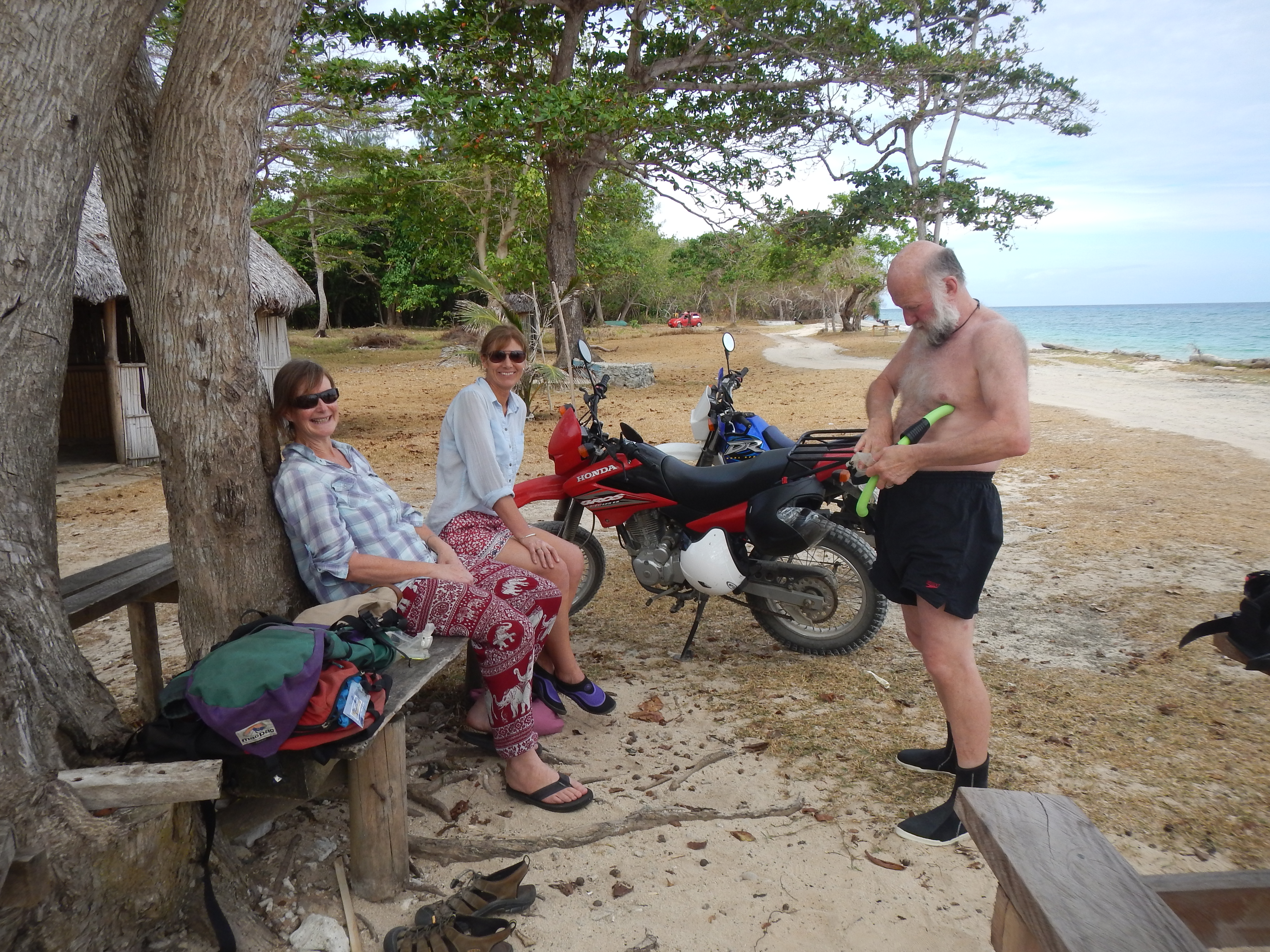
We had looked forward to close friends, Dag Guest and Carol MacDonald visiting us for the last week of October – our first visitors. I met them off their flight into Port Vila and we flew up together to Luganville where Louise provided another friendly welcome. The photo to the right shows our visit to Million Dollar Point where we snorkelled above an assortment of military hardware jettisoned by the Americans after the end of World War 2. Our shared week involved some work for me interspersed with some great adventures.
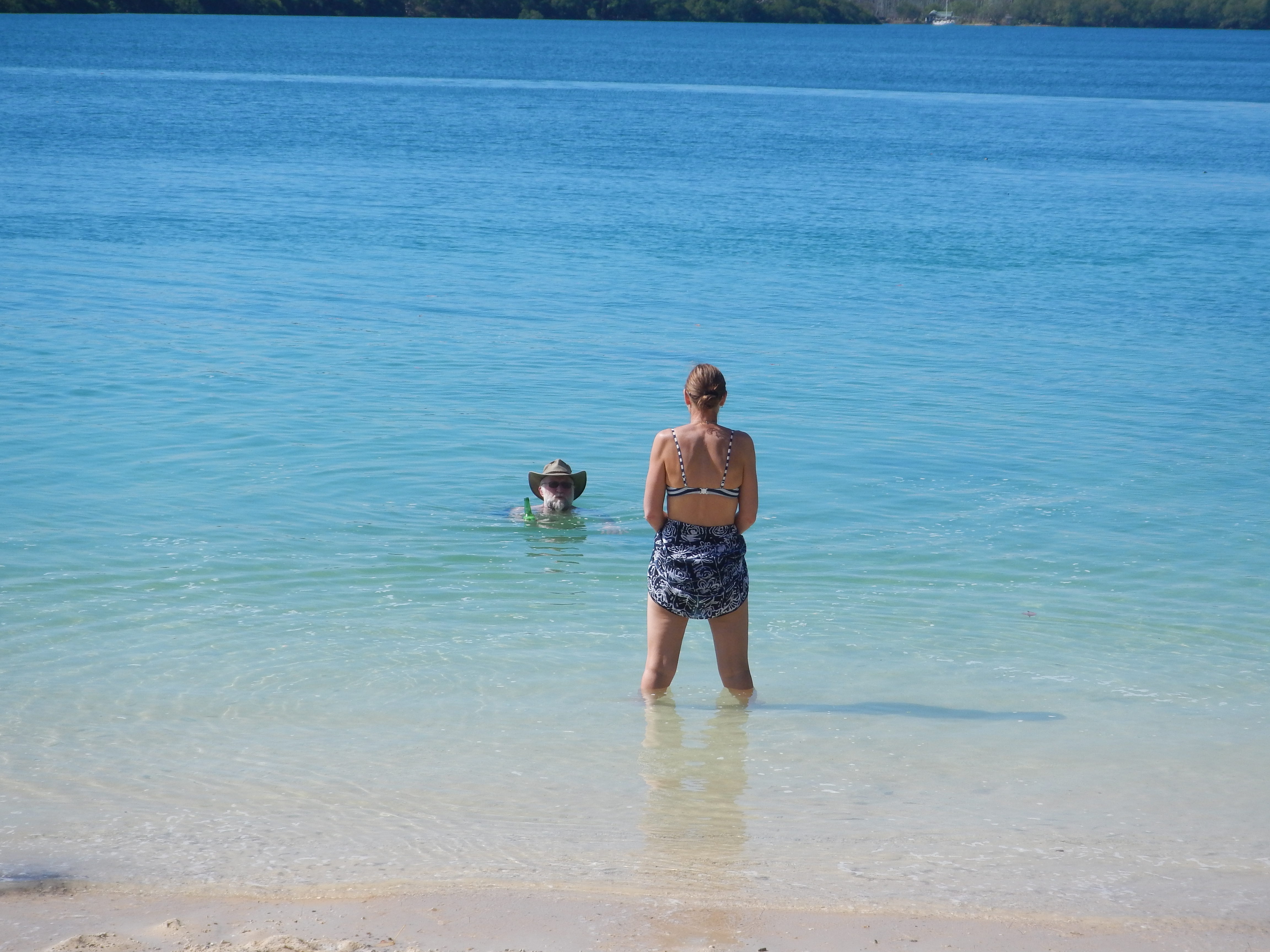
On their first Sunday we went to Oyster island Resort for a BBQ lunch, after which we kayaked across the lagoon, up a long creek, paddle an’ all, to the huge ‘blue hole’ – an amazingly local experience. The photo on the right shows Dagy aclimatising to the warmth with a swim with a Tusker.
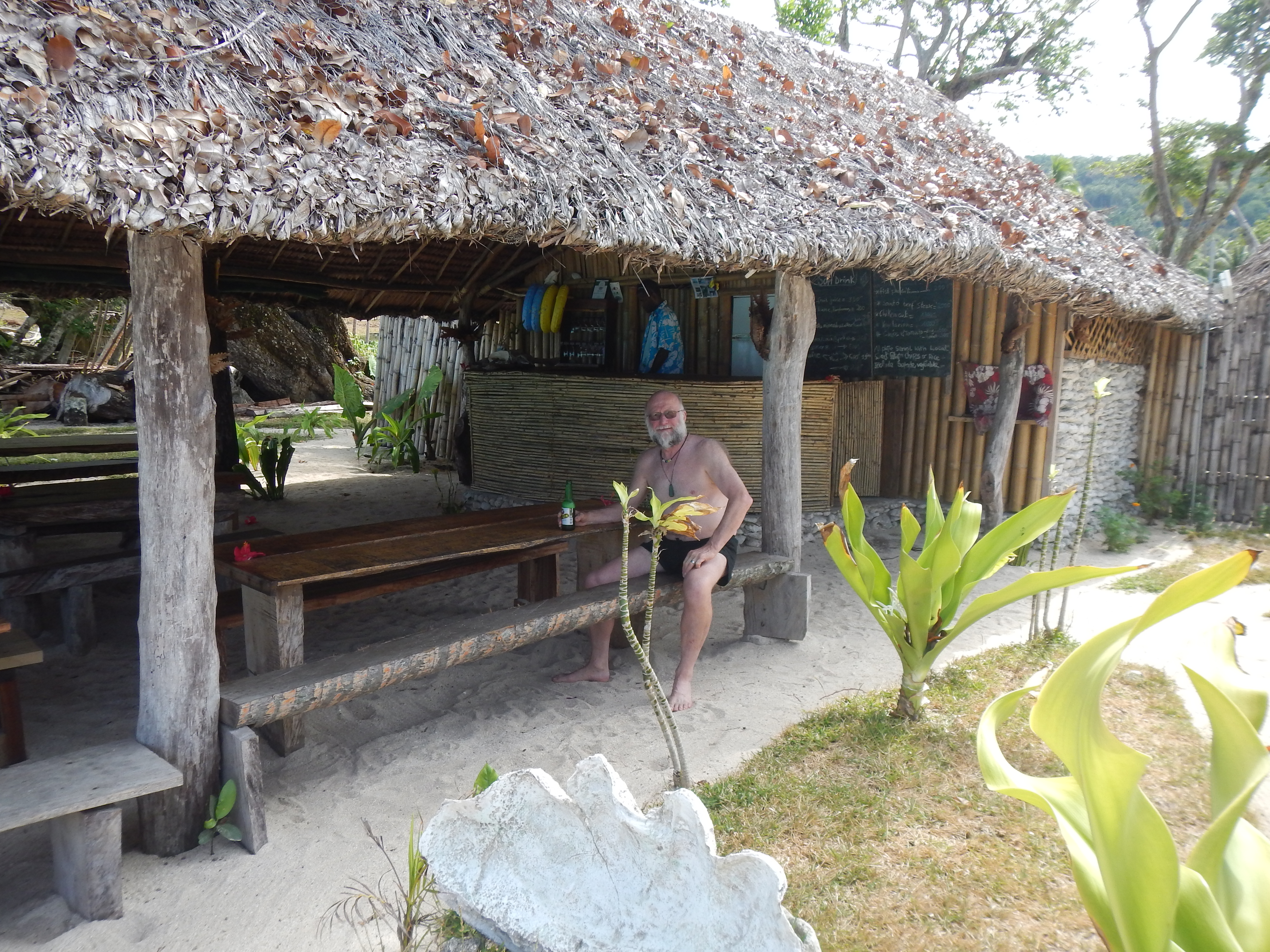
We took them up to a favourite spot up in Port Olry where we spent a night at Chez Louis. By this time Mr Guest was in fully relaxed mode as the photo on the right captures. This was pure relaxation. We swam with turtles. We dined, we drank. we visited a local blue hole for a refreshing swim. All the while being made exceedingly welcome by Silver, who acted as our local guide.
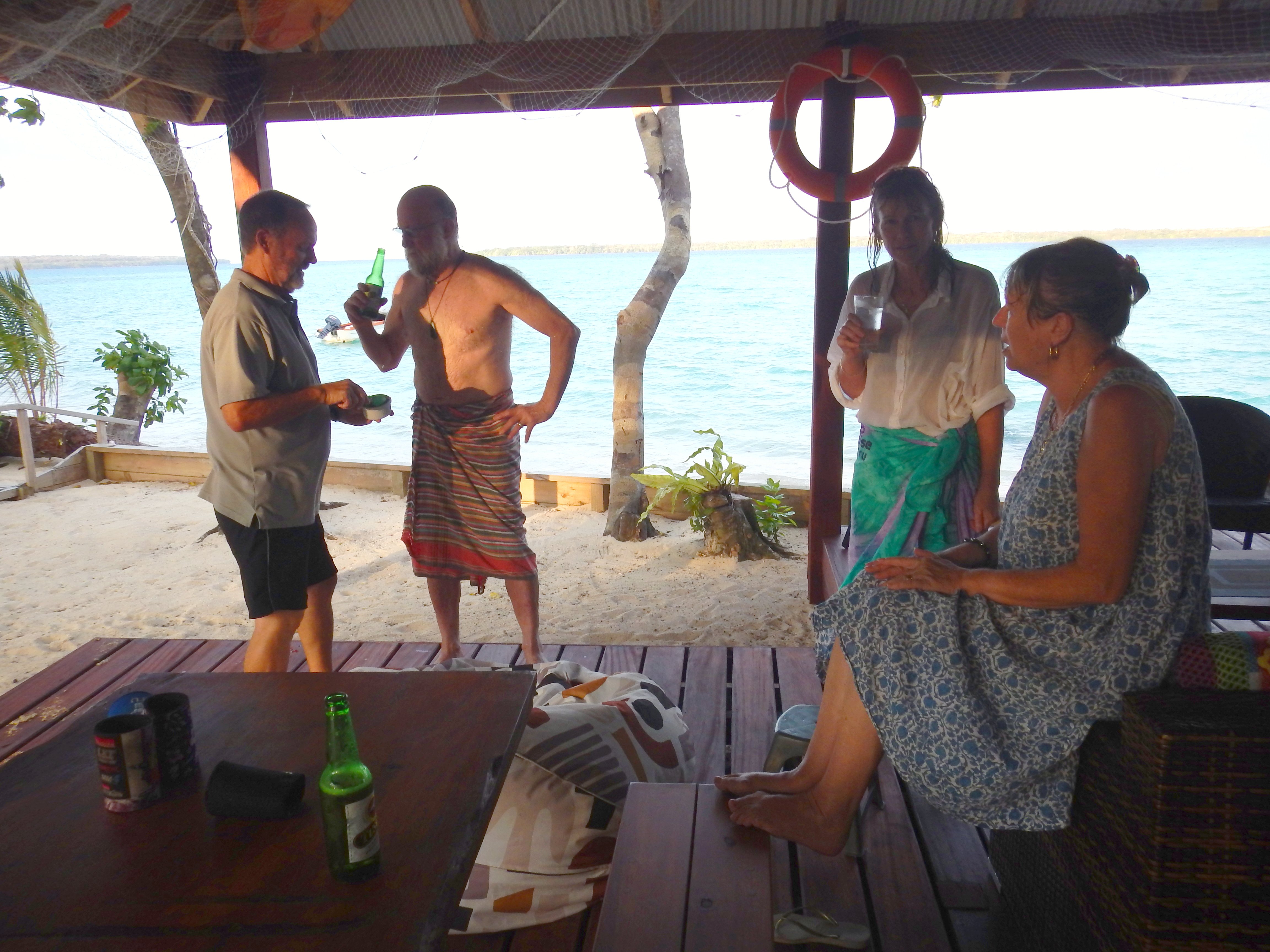
There was also a highly convivial visit to nearby friends, Jim and Linda. We combined resources so that after a swim and outdoor showers, there was adequate refreshment followed by a magnificent meal with a bit more ‘adequate refreshment’. A moonrise over the sea just added to the natural splendour of the setting. It was a great night and after fond farewells and goodnights, we walked home to our special house on the farm.
It was wonderful to welcome friends and show them our Santo world. Worth all the anticipation. Others are planning to come and many are welcome.
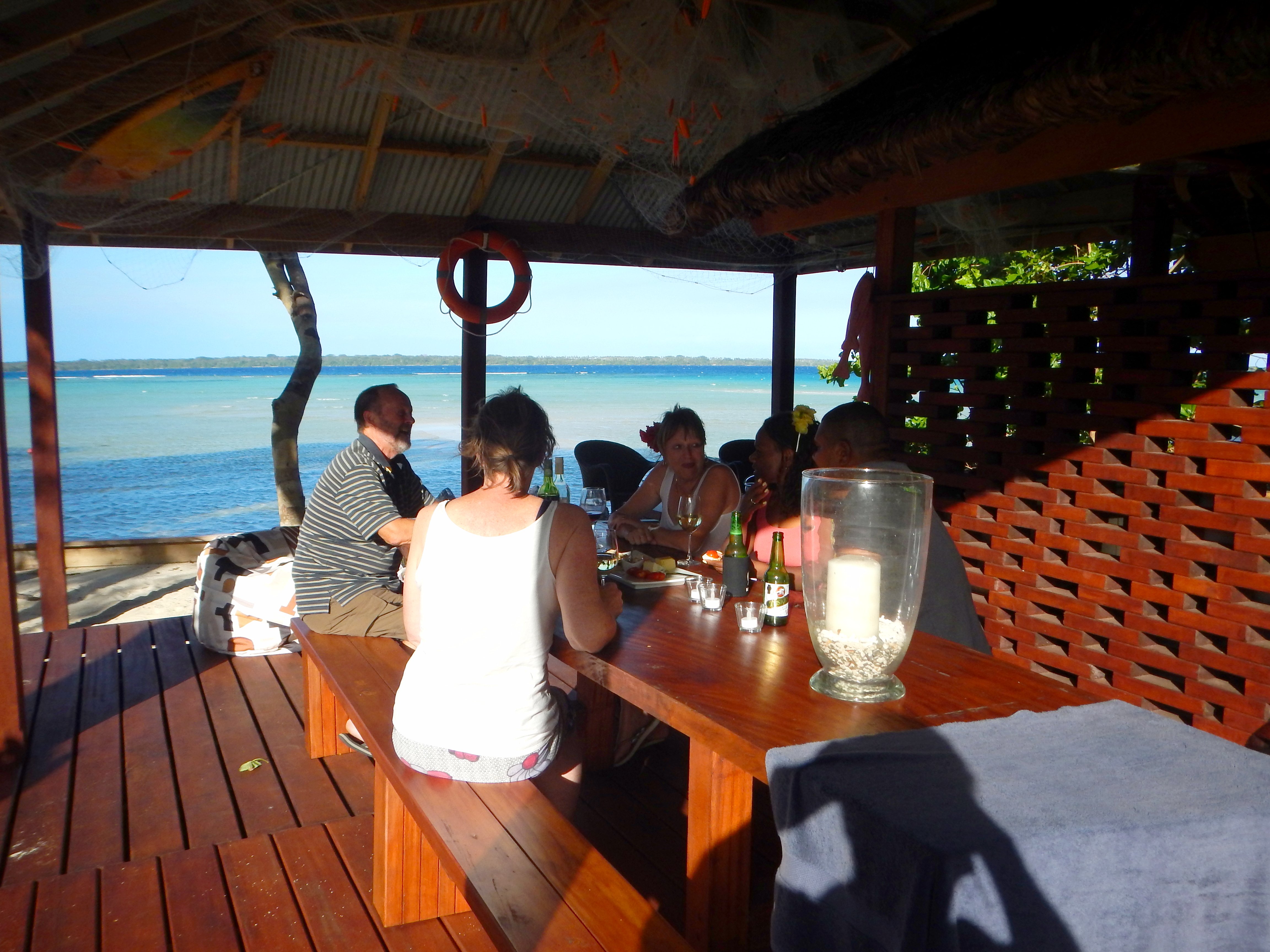
Not far from here on the farm, live friends Jim and Linda Bennie who developed a beachfront property named Mahimahi. This comprises one bungalow that is their house, plus another two that they rent to visitors to the area. At the beach end of their garden is what Jim calls the Nakamal, where food and refreshments might be served if you time your swim well. Or arrange to visit with food, drinks and friends as we did with Dagy and Carol (see the next blog). A beautiful beach is right there and it is a real treat to pop in to say hello.
The bungalows are all built to a very high standard and guests leave refreshed and happy with the Trip Adviser ratings being “Top Rated”.
At the end of September a discussion with a team from the Vanuatu Ministry of Trade and EU consultants launched me into an exciting project that overlaps substantially with my own Coconut Industry R&D. This flowed into October and a need to fit in with the EU timeline that is tight. Meetings in Port Vila were followed by a Coconut Industry Focus Group presentation with me as Mr Facilitator/Presenter. It was successful – there was agreement to establish a private sector Coconut Industry National Coconut Association (“NCA”). This
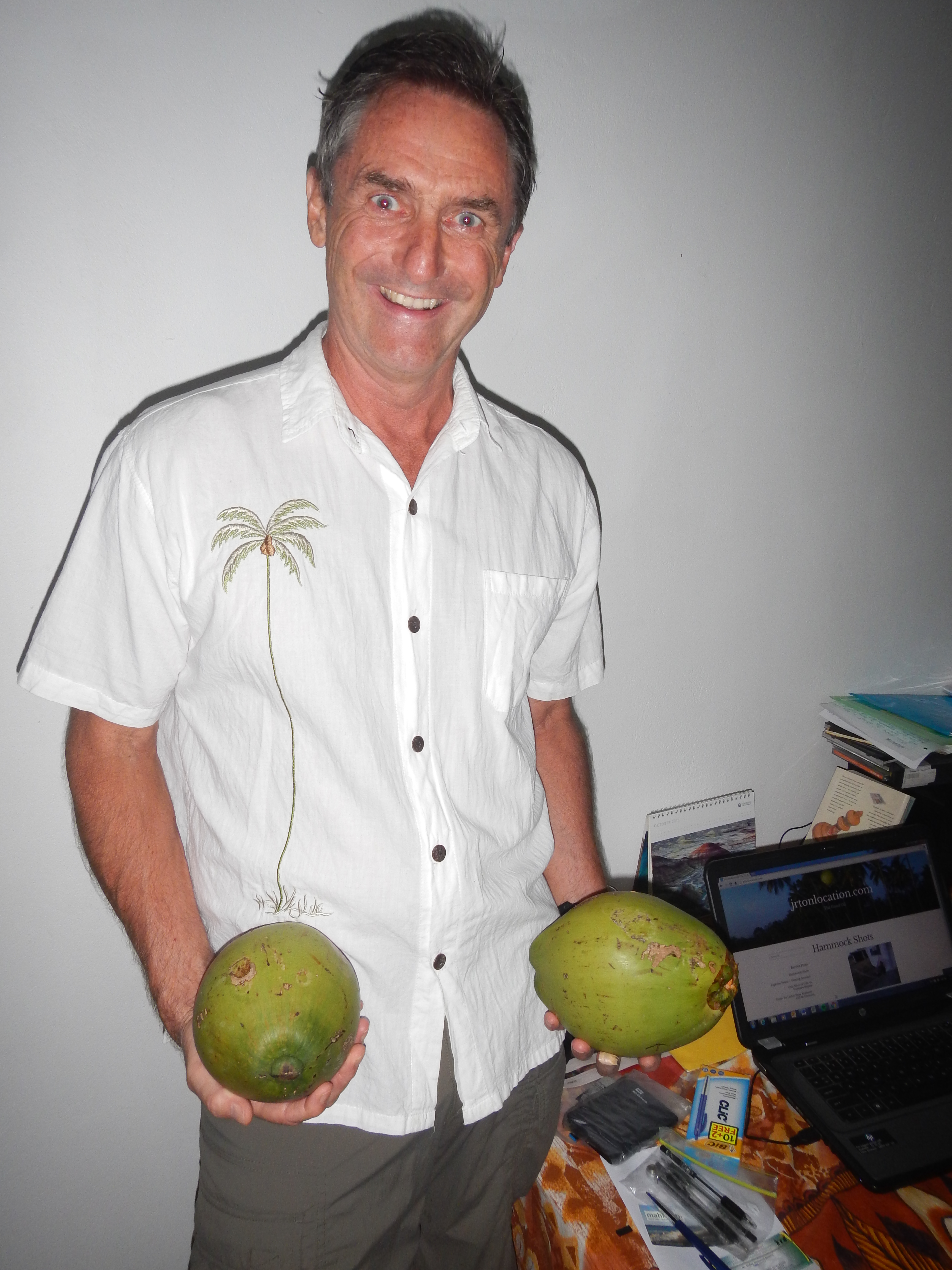
leads into an expanded Validation meeting in Port Vila on 5 November and doubtless, more work to follow. The hope is that by taking a central part in the Vanuatu/EU Partnership’s coconut industry development work, I can access external consultants and fast track some of the research I was going to have to do solo. That’s not to mention the funding that has been allocated to the sector. On the right you see Mr Facilitator in his work gear.
Early on I found that pursuing one main line of enquiry or work proved too slow with whoever one was engaging with failing to show up as arranged or taking an absurd amount of time to respond. This is Vanuatu. So instead of working on various work avenues sequentially, I set off on a handful concurrently. This got things moving but recently a few of these avenues became fruitful, busy or both – all at once. Examples of ‘work avenues’ include (i) an early report on VARTC to its Heads of Divisions and then onto the Board; (ii) a review and modification of the financial reporting configuration; (iii) Cocoa Diversions – covered below; (iii) upgrading the coffee labelling and looking into branding options; (iv) sourcing an urgently needed irrigation scheme from NZ and (v) exploring different Virgin Coconut Oil (“VCO”) processing equipment and methods. It’s all most entertaining. Hopefully there might be some valuable ‘outcomes’ of a sustainable nature before we leave in July 2017.
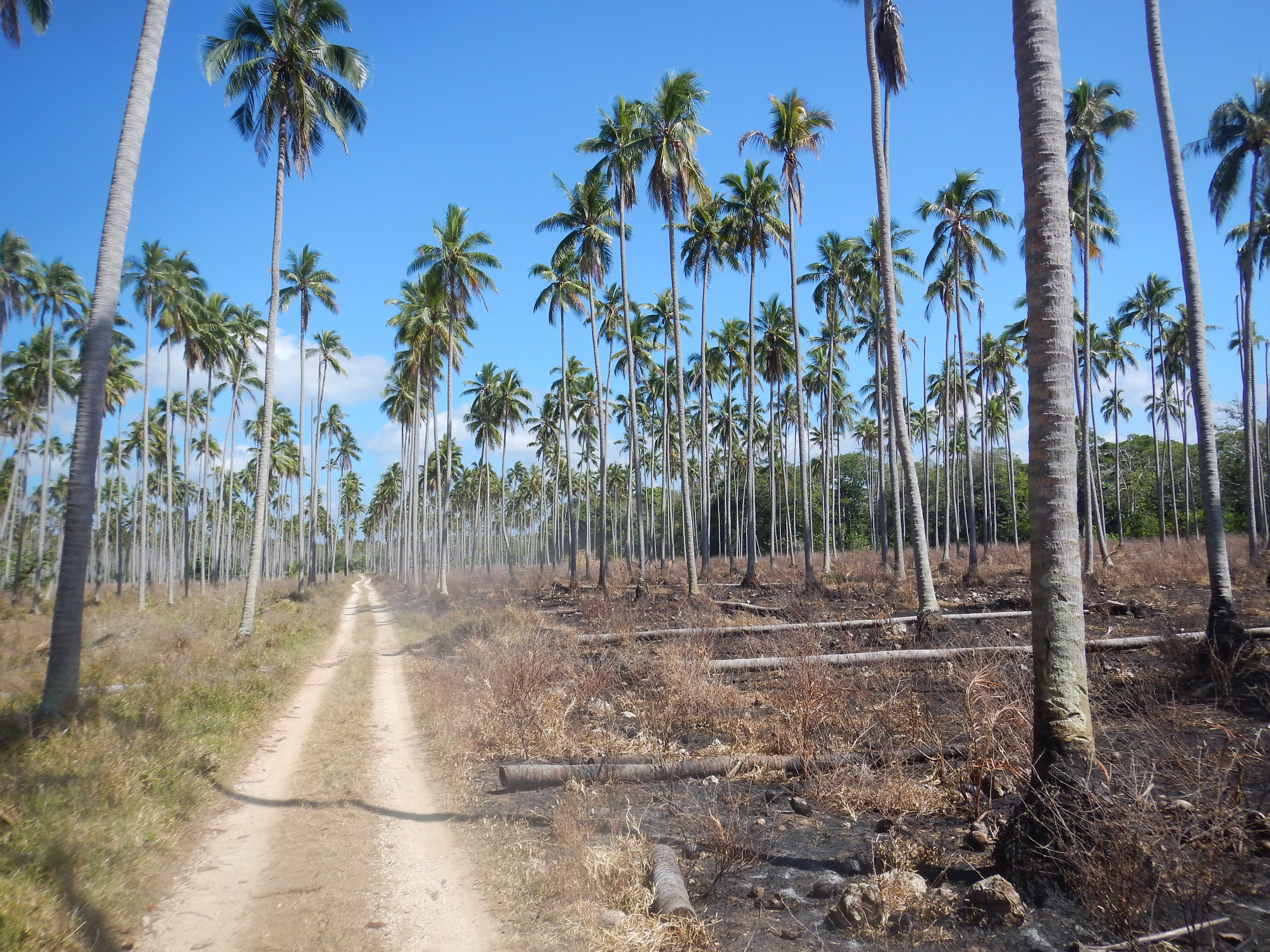
On the Aore field trip (next article – “Cocoa Diversions”) we motored across the island which, like here on Santo, has been suffering an El Nino-induced drought that started about 2 months ago. we drove through coconut plantations where the browned grass was so dry that little bush fires were starting up and sweeping through as shown on the photo to the left. The VARTC farm is always starved of cash and most of its sales revenue derives from cattle for beef. This operation is entirely grass fed. Droughts are rare – Vanuatu is usually blessed with warm temperatures and frequent rianfall – so no field-scale irrigation equipment exists. But we have a plentiful supply of artesian water that emerges into the ‘blue hole’, where we swim to cool off and from where it is pumped up the hill to 2 large storage tanks. I’m in the process of sourcing a K-line irrigation system from New Zealand with some parts being provided free of charge (they’re used and no longer required) and some parts that need to be bought. Then the lot needs to be freighted out here pronto by plane. Should you wish to contribute a few dollars to this cause, please add your message on this site or e-mail me at my usual address.
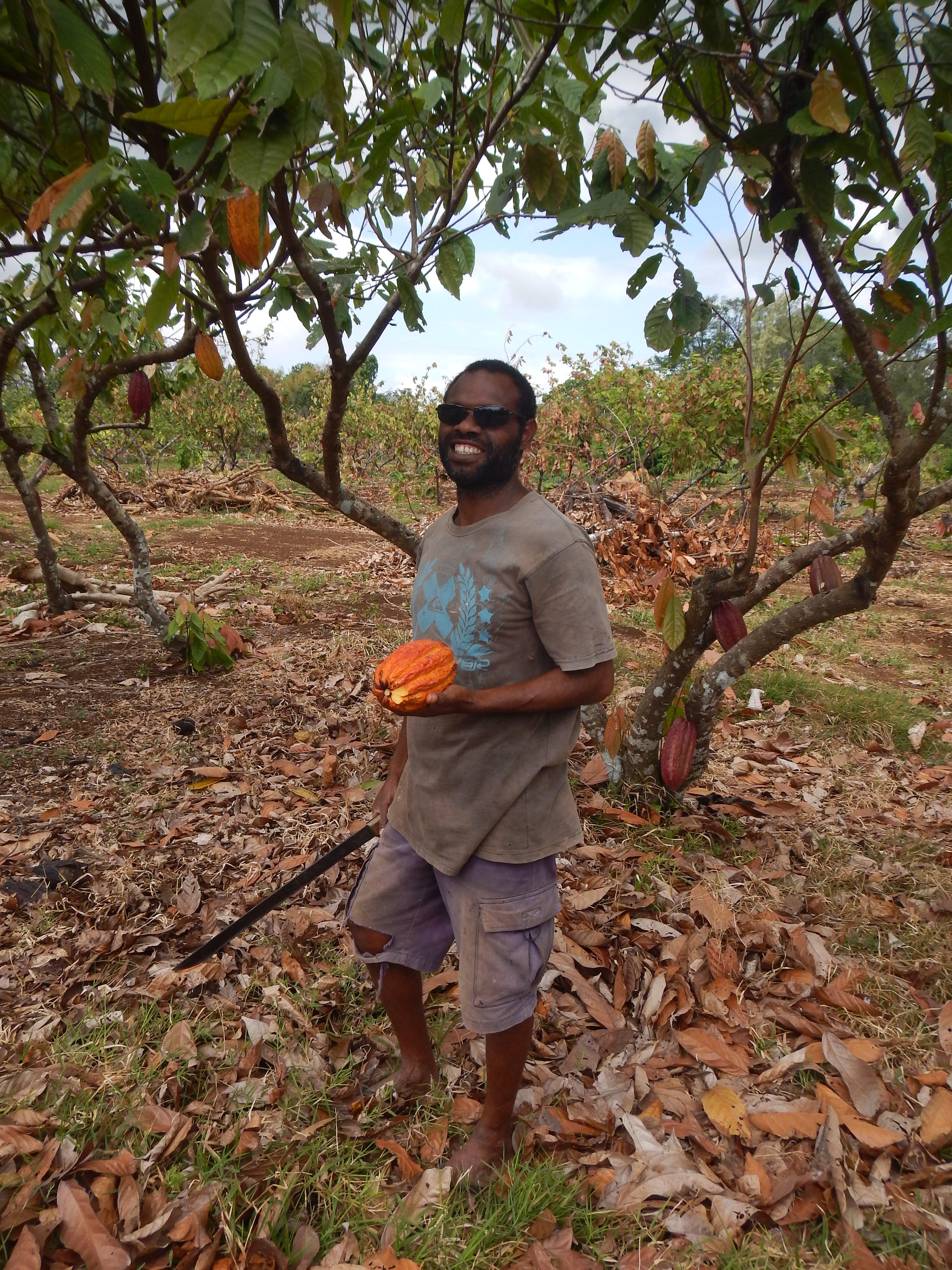
At VARTC, my local ‘partner organisation’, I share an office with Marie, who is full of beans and Head of Beans. This proximity delivers some colourful diversions from coconuts. In October there is the Little Harvest when a smaller crop of cocoa pods is harvested. As you can see to the right, this is a happy occasion. The pods are wheel-barrowed to an area where they are placed in heaps according to the variety. Then a group of ladies gather to crack them open and extract the moist beans. These are then placed in wooden boxes and fermented for 3 to 5 days. After that they are dried and eventually they go to a chocolate maker and via an elaborate process, end up as, well, chocolate.
On 19 October Marie asked me to accompany her on a visit to Aore island to
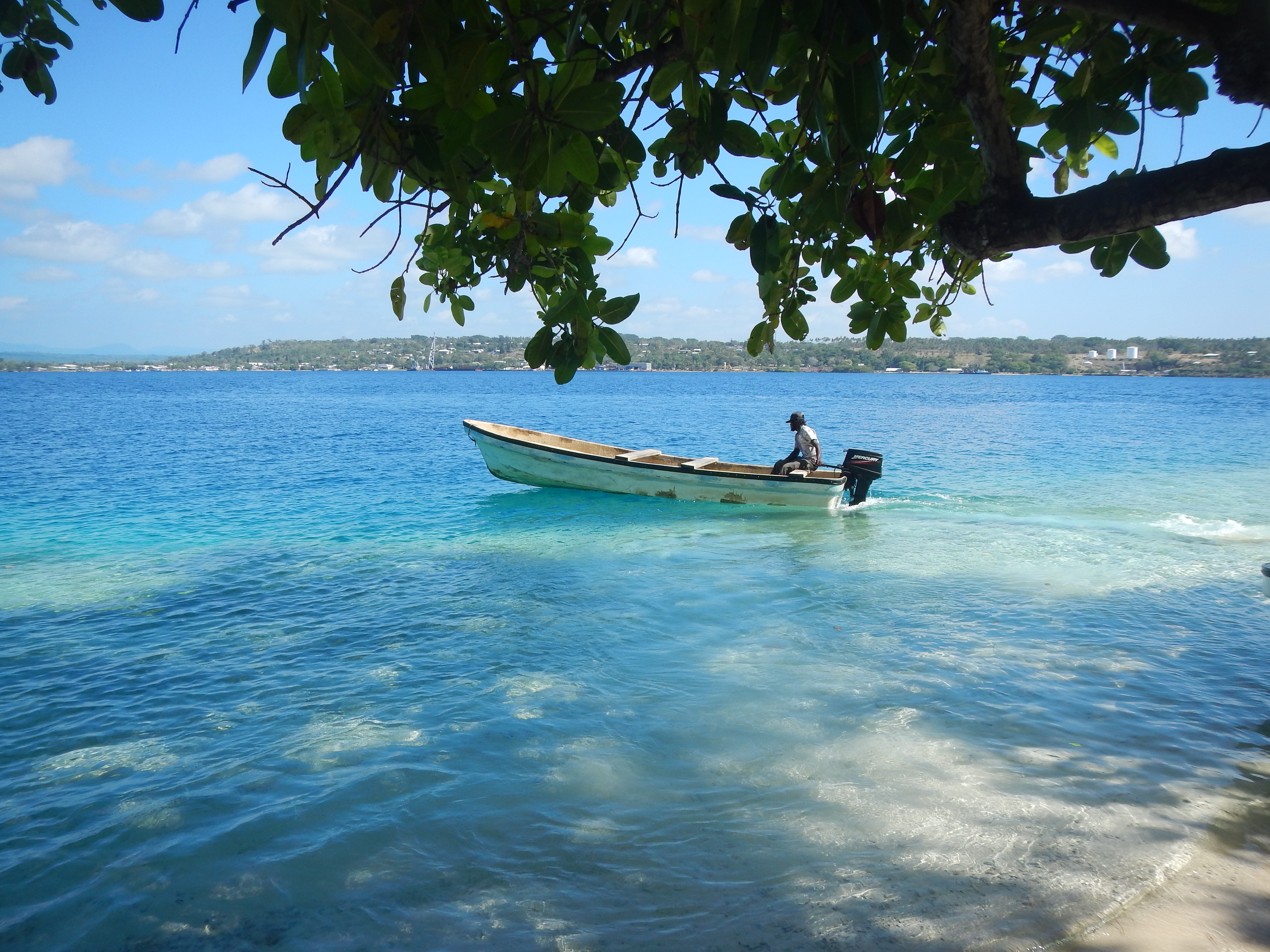
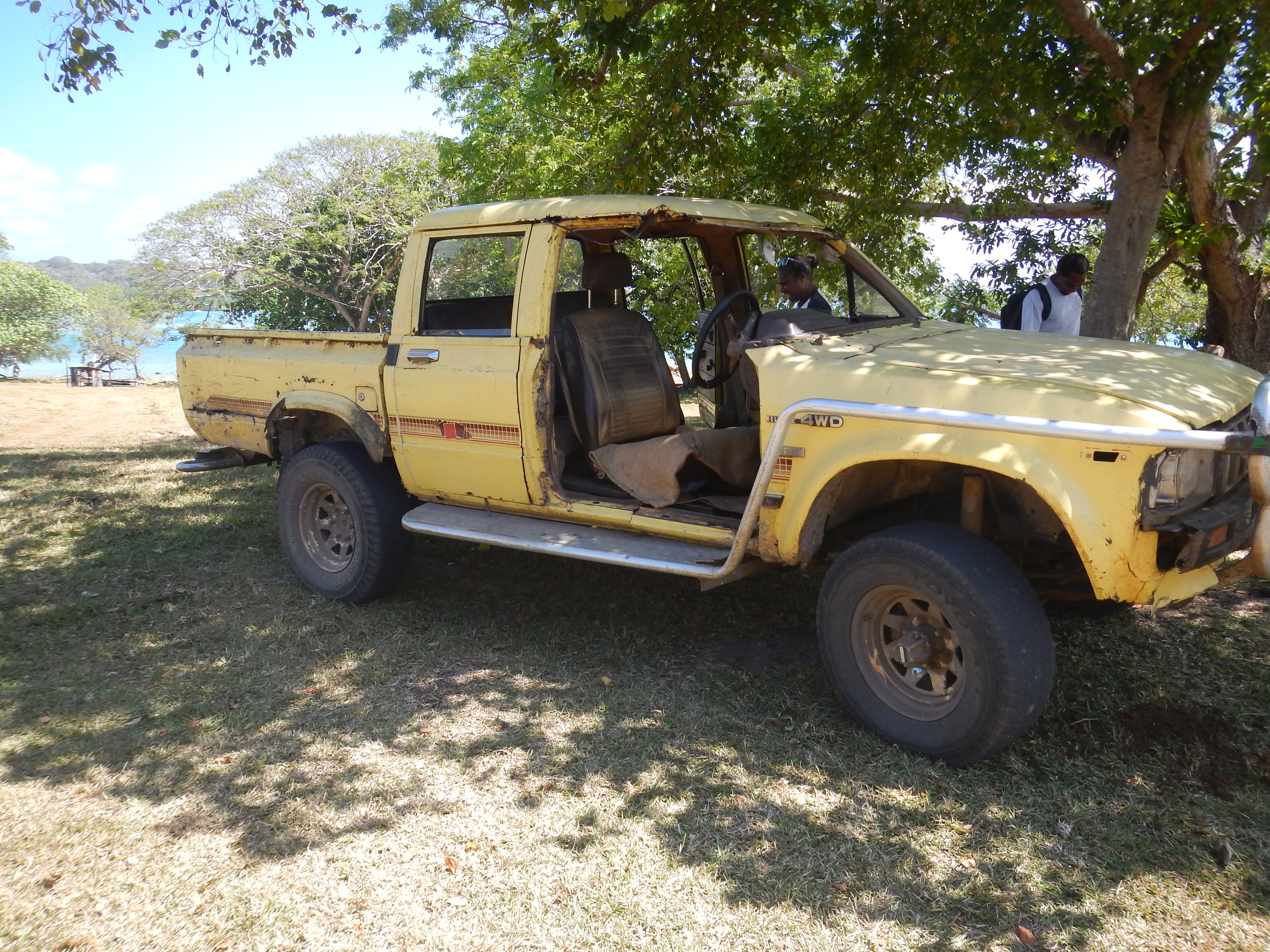
evaluate an aging cocoa plantation, from the horticultural (her) and economic (me) perspectives. After a 20 minute crossing from Luganville, the ferry shown on the left departed after dropping us at a beautiful beach. Facing inland I spotted a derelict Toyota ute that may have been adapted as a chicken shed. We crossed
a field and were hailed by the man we were due to meet. He owned the 500 property on the far side of the island, the 20 hectare cocoa plantation and the Toyota chicken shed. This was no ordinary chicken shed. While it lacked some of the niceties of cars, such as windows, front passenger seat, one roof support, driver’s door and brakes, it did prove to be an exquisite example of island transport. We stopped along the way, not abruptly of course, collected a few people and eventually charged up a hill, smoke billowing out and nearly asphyxiating us chaps on the back. But then a bump or two, and we entered a mature forest under which we found the aging cocoa trees. Marie did her inspection, I chatted to the owner about his coconut enterprise and eventually we all bounded back down the hill without incident and returned to VARTC late in the day. My side of the report was mostly completed the next day and although I’m still waiting for some hard data from Marie, I cannot see the cocoa becoming economic. A colourful trip though.

 jrtonlocation.com