
Hidden Valley Tourist Park is one of only two places tents are catered for in Darwin. We nabbed a good possie and made this our base while we attended to various bike maintenance jobs and a long overdue effort to update our respective blogs.
Bends in the roads in The Top End are so few and far between that tyres wear more quickly due to only the centre doing the work. Ours were legal but the next sensible place to replace them is Perth, some 6,000 + kms away. To reduce the risk of an expensive hold up between Darwin and Perth, we replaced all four tyres. A more challenging job was to change the tops on our reserve tanks. This became a wild goose chase with a happy ending. I opted for black irrigation fittings and had the great pleasure of meeting John Gibson in his engineering workshop. With his oversight and indulgence, the job was completed and a few cold ones shared. 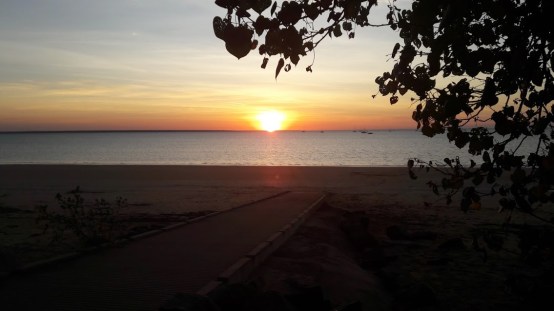 He bade us meet him at the Darwin Sailing on 31st where the sun and a few beers went down in the outdoor evening warmth that is so comfortable in Darwin – at that time of year. We met up gain at the Saturday morning Parap Markets, grabbed Asian soups and followed him to his partner’s studio. Winsom Jobling is recognised in Australia for her particular form of art ………. which is ‘paper’. She described the process and showed us many examples of here work.


The photo on the left is of large example of paper made from banana tree stems. There is no drawing or printing superimposed – the art is the paper itself. The process is elaborate. Much work and care is involved. The result has an organic form of beauty to it. On the right is an example of paper (made from what in this case I didn’t note) with a pattern upon it made from natural dyes collected by Winsom from the bush. The work ‘speaks’ of Northern Territory. For my tuppence-worth, I preferred the unprinted papers and enjoyed seeing a photo of an exhibit where beautiful paper has been folded into the form of an evening dress. Winsom has made three dimensional works made from the paper – these move my boat the most. If curious, google her.
By the time we had sorted our bikes and updated our web sites, we were keen to get back on the road so only one day was spent peeping at Darwin’s tourist attractions.
Aeronautical Museum
Darwin was Australia’s “front line” in World War II, with its proximity to Asia and the threat from the Japanese. Today, Darwin’s airport is a significant RAAF base which ‘leases’ landing rights and ground operations to commercial players. To minimise the risk of aerial mishaps, the control tower is run by the military and only the military.
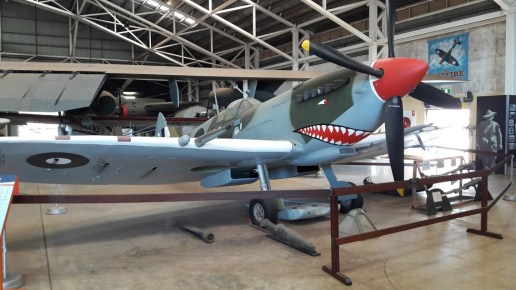 The US airforce had a major presence in WWII due to it being the RAAF’s most northerly base.
B52 Bombers were able to fuel up and, subject to their load – fuel/bombs – were able to circumnavigate the globe without passing over much land. For more information, visit: http://www.darwinaviationmuseum.com.au/
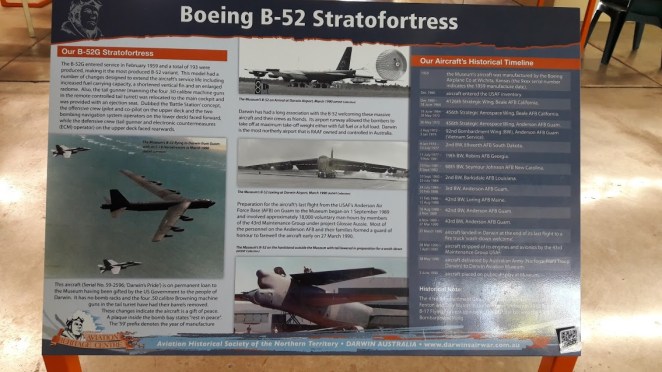 The B52 sign above didn’t take up much space in the giant hangar but the actual B52 itself
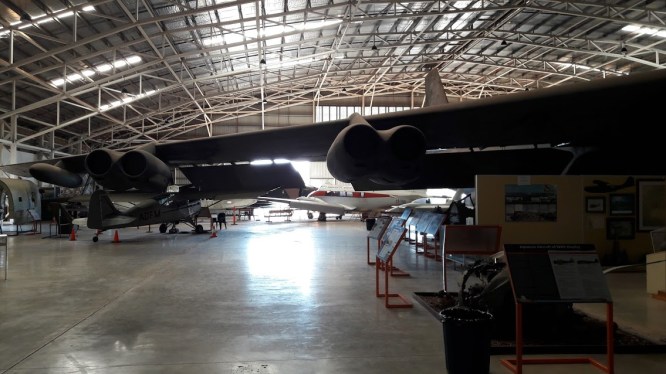 took up virtually all of it. Gifted the above B52 for display to the public. A massive hangar was erected and today, the Darwin Aeronautical Museum offer the public the opportunity to view several military aircraft from the past, all assembled around and under the gigantic B52.
Underground Fuel Depot Museum
Yes, an unusual exhibit but part of Darwin’s World War II story. Following the Japanese aircraft carrier armada’s attack on Pearl Harbour on 7 December 1941, the elderly, plus most women and all children we evacuated from Darwin and efforts to bolster its defences cranked up. On 19 February 1942, a handful of days after completing the substantial fuel storage tanks to supply the military effort from this strategic base, that same Japanese aircraft carrier fleet attacked Darwin and flattened a large proportion of it, including the newly erected fuel depot. An underground fuel storage depot made up of tunnels was commissioned and 400+ civilian men set to it with basic equipment and in rather warm conditions. The job was completed just before the end of the war and today, fuel-less, the underground fuel depot is available for inspection by the public. The scale is impressive, even if the depot’s active life was virtually nil.
Military Museum.
Entering the museum visitors are promised nothing less than one of Tommo’s Pies. Having sampled many Aussie pies, I felt I should give this one a go. It didn’t live up to its name!
The Military Museum had an indoor matrix of display cases and exhibits., with visitors gaining a good understanding of how World War II came to Australian soil.


The educational impact was assisted by audio clips and a brief video, that provided an account of Darwin’s involvement in WWII and how various characters played important roles. The photo on the left is an illustration of the Japanese offensive. On the right an explanation of the anti-submarine nets.
There endeth this overview of our time in Darwin. We rode out the following morning, headed south to Kathryne, then veered west on the Victoria Highway in the direction of Western Australia and in particular, the Kimberley.
 jrtonlocation.com
Fascinating reading and great photos! You’re very experienced travellers on a trip of a lifetime!
LikeLike