
With our doggy charges well fed and walked, we departed the Armadale house sit on Sunday 5 November and rode east to Hyden, three plus hours through eucalypt forest which gave way to the ‘Wheat Belt’.
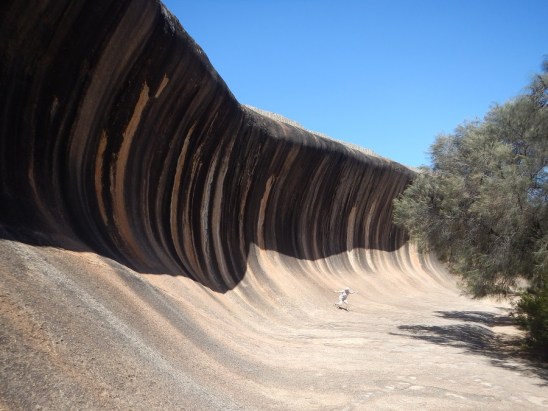 Wave Rock was the attraction at Hyden. the photo on the right captures not only Wave Rock, but Louise surfing on it.
As the expression goes, ‘Mad dogs and Englishmen go forth in the mid-day sun’. So having looked at Wave Rock and clambered over the great, granite humps behind it, we set off at noon to do the 5km loop walk across the ‘salt-killed’ shallow basin around to Magic Lake and then back. To say the flies are keen in this part of the world would be a massive understatement. We spotted a solitary flycatcher. He was neither fat nor subject to competition from mates, yet his food source seemed abundant. Too laid back perhaps?
The clearing of the 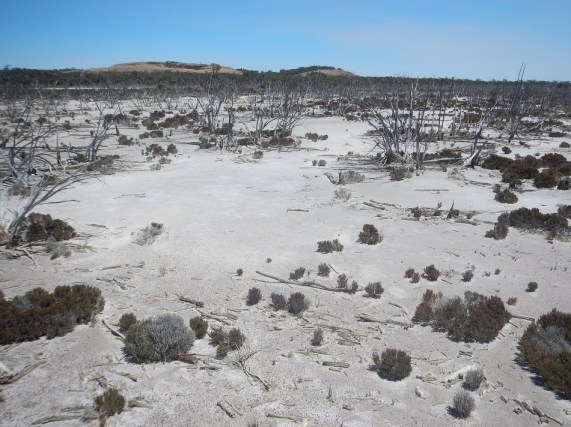 original native vegetation for wheat farming has proved short sighted. Relative to what was cleared, cereal crops consume little water and all of that from the surface layer of soil. The lack of water drawn from greater depths by deep rooted plants with greater transpiration rates than wheat, caused the water table to gradually rise. The naturally occurring salt in rain accumulated in the soil with the result that 11% of the land previously in wheat is now too saline for this crop – or any other crop. If no intervention is made, this figure will rise to 30%. Magic Lake was fringed by salt deposits and the other low-lying areas, and as per photo above, are desolate due to the exaggerated salt content. We wish the regional farmers well who are striving to reverse the salt affliction of their own making. Subsequently we crossed the wheat belt on the Perth to Adelaide train, spotting many large low-lying areas where plant life was prohibited by the saline soil. A wave of my wand would see deep wind-powered water bores, solar-powered desalination of that water, then irrigation of it over the salt pans. After a few years, replanting may prove worthwhile followed by a few decades of continued ‘cleansing of the aquafers’ and continued irrigation. Eventually, the dead 11% would be returned to deep-rooted native trees and bush that would prevent the ruination by salinisation from spreading. Easy really.
We also visited Mulkas Caves about 19 kilometres away. 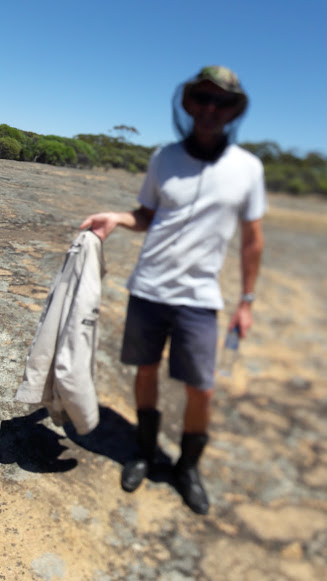 The Aboriginal art in the cave was virtually all ‘hands’ with most difficult to discern. We did a marked walk in the area accompanied by squadrons of Aussie flies. The photo on the right shows some hot fashion, complete with a head net.
Along the path through the bush we saw our first live snake close up. This 20 centimetre monster slithered off into a tuft of grass before we could get too excited.
Two nights would have been ample at the Wave Rock camp site but alas, we had to stay on for Tuesday 7th November in order to respect our annual ritual of watching the Melbourne Cup with a bet on and bubbly in hand. This event was to screen at noon WA-time and our next stop, Esperance, was too far to allow us to be set up for the great race there. With no access to betting facilities, Lynley kindly placed our bets back in Christchurch and at the Hyden pub, bubbly in hand, we watched Louise’s horse win the race. The resultant surge in our financial fortunes will not change us or our lives. It was two bucks each way!
Esperance and Albany
The next day we rode down to Esperance, 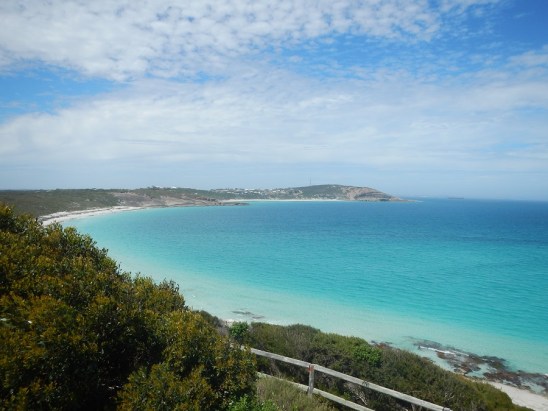 had a brief look around, sampled a pie (rated a 5) and departed west. Due to an unsealed road to the intended bush camp being corrugated and covered in something akin to red ball-bearings, we ended up pitching the tent at a road house just short of Ravensthorpe, Esperance itself looked uninspiring but its beaches were sun-drenched white sand and turquoise waters – as above.
At the road house, our little tent was only a few metres from huge road trains which shuddered, roared and belched exhaust fumes at us as the drivers shared the joy of early morning with us. This unceremonial early start sent us riding west to the unexpected jewel that was Albany. The topography of the area lent it beauty, with King George Sound, the natural harbour, being immense. The town retained great historic charm and acted as the nucleus for numerous nearby attractions. Such as The Gap, the Natural Bridge, the ANZAC Museum and The Whaling Station.
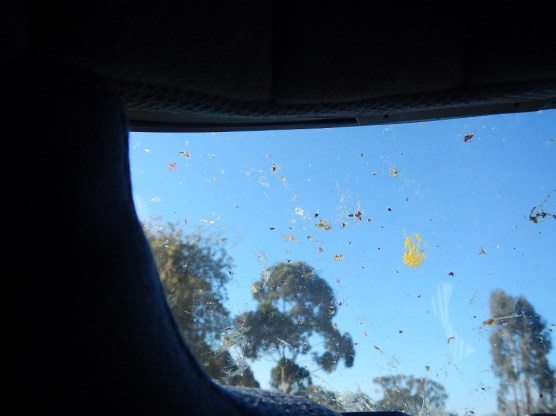 Before describing our more interesting experiences in Albany, take a look at the shot taken from the inside of my motorbike helmet. The insect life in this south west region was prolific with cabbage white butterflies being most obvious, unlike the cabbages that are supposed to attract them. Yet many Harley riders go for the open-faced matt-black helmets – tells you something about Harley riders.
The ANZAC Museum.
I had been unaware that the ANZAC troops that went to join the World War One effort, were all gathered in Albany upon an armada of naval and conscripted civilian ships, all moored in King George Sound.
By late September 2014, following the declaration of War by Britain, 6,000 Australians and 7,000 New Zealanders had volunteered and were ready for the departure on the first convoy that left on 1 November 1914 – a surprising imbalance. However, the final number of departing troops was recorded as below left, in a moving infinity pool where, under the shallow water, the list of troops progressed outwards towards the horizon.


This impressively imaginative memorial was bracketed by wall signs, one above right noting the total number of troops that left Albany bound for the 1st World War.
On the other wall, the sign simply noted that “30,000 fighting men representing Australasia are under way for the great war.”
Although a little hazy, you might discern the great vantage point (below left) offered from Mount Adelaide, where gun emplacements were built.


Then imagine the sight of the armada – right – waiting out there at anchor for the off.
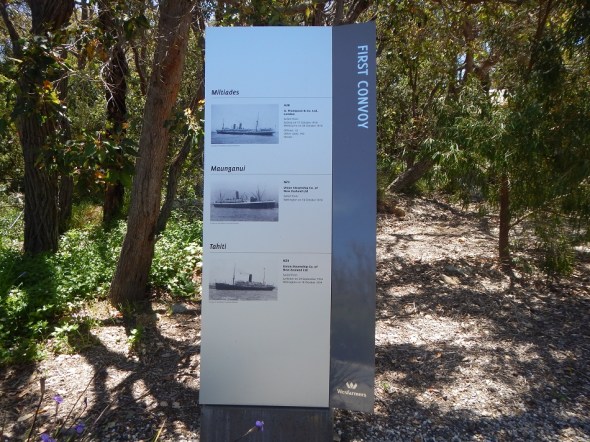 On the walk up, signs list all of the ships that departed in the 2 convoys with the one on the left listing three of the New Zealand ships.
Any Aussie or Kiwis that find themselves in the south of WA, should visit this inspiring museum. One day we spent a couple of hours in the morning, took a breather for lunch, then an hour or two in the afternoon. The skill of the curators of this near new museum (opened on 1 November 2014 by the Prime Ministers of Australia and New Zealand) was immense, combining modern technology with imagination to create an experience that was as involving as it was absorbing. For a better insight, go to http://www.nationalanzaccentre.com.au. The other visitors we spoke to all found it intense, exhausting and rewarding.
As part of the same Albany Heritage National Park, on the neighbouring peak of Mount Clarence, was the Monument to the members of the Australian Light Horse, the New Zealand Mounted Rifles, the Imperial Camel Corps and the Australian Flying Corps who lost their lives between 1916 and 1918 – see photos below.


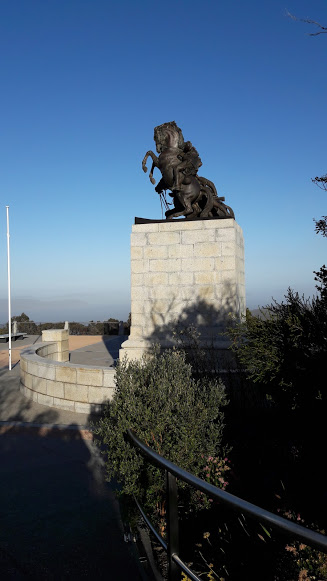 The day was a moving mix of enthralling education, inspired interactive displays, real views over King George Sound imagining the sight of the ships awaiting departure and lastly, the magnificent memorial to the horse-born troops, seen only a few weeks after the 100th anniversary of the against-the-odds victory in Palestine.
Afterwards we enjoyed a soothing drink in the ANZAC Museum café, mine was a rather good Bitter that bore good friend Wilf’s name, made at the local Wilson’s brewery.
The Albany Whaling Museum
I was surprised that commercial whaling only ceased in Australia in 1978, just eight years before I arrived permanently in New Zealand. The cause was little to do with dwindling numbers of whales or increasing public concern, but all to do with the mid-seventies hike in oil prices, with oil being a major cost to the processing of whales to produce whale oil.
It was a gruesome experience, made more ‘personal’ by the joyful antics of the Hump Back whales we had witnessed along the WA coast.
Going Green
The tourism blurb on the Walpole and Pemberton region was a bit of a glossy pitch, particularly where Manjimup was concerned. Its central to northern location and “foodie-centre” description encouraged us to make that our four-day base.
The weather was foul on Monday 13 November so day one was spent in the Manjimup Public Library catching up on e-mails. Mick Ryan from Sydney shared the evening with us as part of his lengthy motorbike return trip having zipped across to Perth to attend the Black Swan Exhibition function for the artist submitters, his wife Sally having an entry in this prestigious competition.
Tuesday we rode down to Walpole to experience the 45 metre high walk through the tops of the giant Tingle Trees.


Here’s a Tingle Tree below
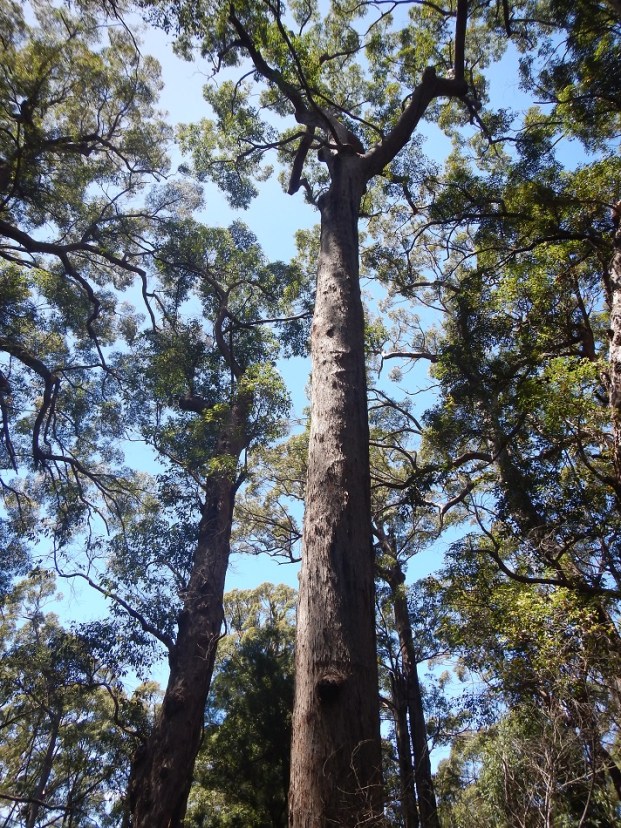
And here’s how some are at the base.


Wednesday saw us ride to Pemberton to enjoy a train ride through forest.
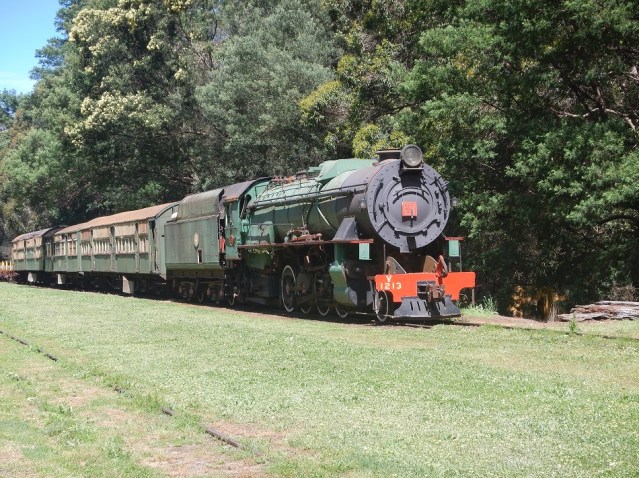
No, unfortunately not that one ……………… but the one below
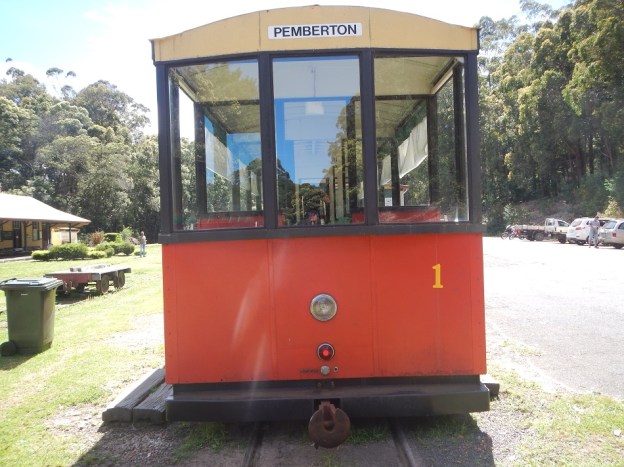
At one point we were confronted by bandits on the line.
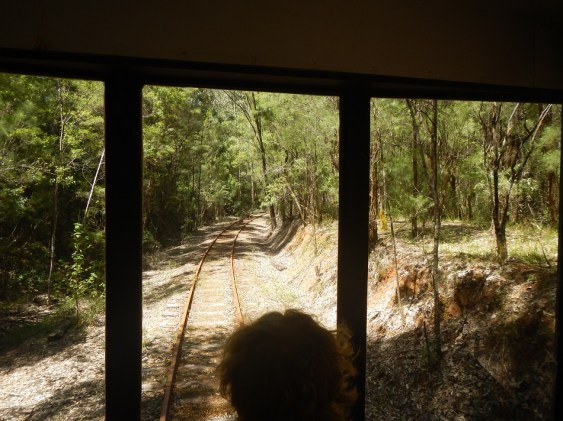
You may be able to expand the photo and see a couple of Kangaroos on the line. The largest of the two roos approached the tram shaping to kick it in the head, only to hop off into the trees at the last moment.
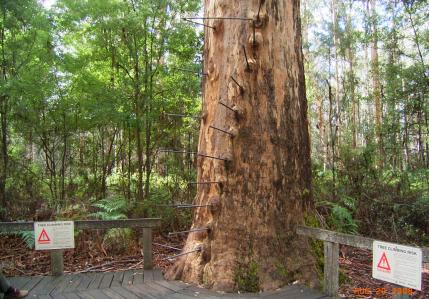 Then we visited the Gloucester Tree, one of a handful of ‘look-out’ trees. These are particularly tall Karri Trees that are on forested high ground. Metre long pegs have been banged into them, forming a near vertical spiral ladder allowing observers to scan the surrounding district for bush fires and sound the alarm. Now they serve as tourist attractions, allowing folk to climb up to the top and


onto the viewing platform to gaze 360 degrees around over 10 to 30 kilometres of forest. Above are two of the views I enjoyed from the platform 53 metres up the Gloucester 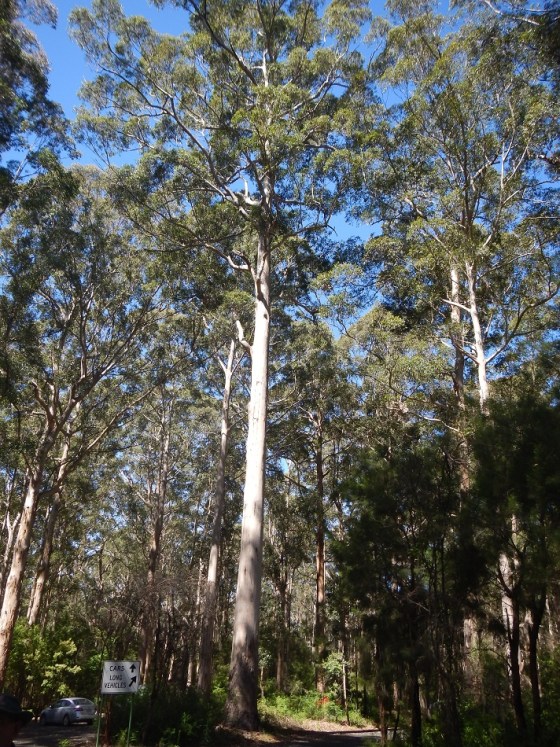 Tree. On the right is a much smaller example of a Karri tree. For Kiwis reading this, there is no relationship between Karri and Kauri, the former being members of the Eucalypt family.
The next day we were up early and riding up through Bridgetown, where we should have stayed instead of Manjimup, and on up to Perth for our final three nights before heading east on the Indian Pacific Train. The Arundel Boutique B&B and Apartments in Fremantle was superb, being a short walk to the Markets, the Sail and Anchor, the Norfolk Arms and other local assets.
Our last night was at Batavia Apartments, on the corner of Palmerston and Bulwer Streets – highly recommended for a central Perth stay offering terrific value plus Le Papillon café across the road with arguably the best French baking in Perth.
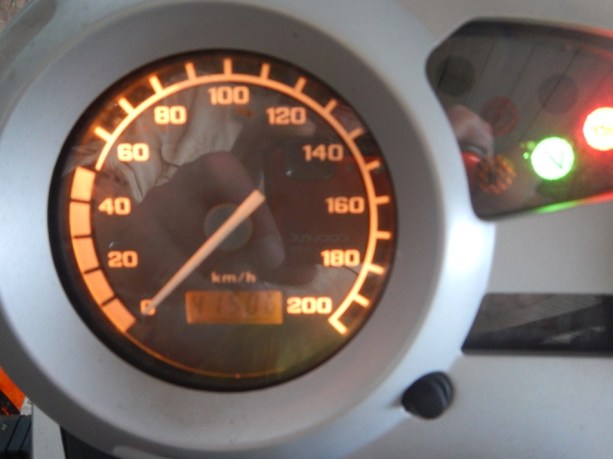
The speedo reading on my bike, just before it left Perth and WA on a transporter, is shown below. It reads 41,506 kilometres, demonstrating we had notched up 3,407 kilometres exploring WA south and SW of Perth.
The next posting will describe what we hope will be a fabulous choo choo experience, chugging across the famous Nullarbor Plains that are a major portion of the land mass between Kalgoorlie and Adelaide.
 jrtonlocation.com