
We arrived to our particular property in the beautiful Dandenong Hills on Boxing Day, met Rob and Rosemary who introduced us to their two hounds before heading away. Part of their briefing to us included reference to the fire risk, what siren to be alerted by, which radio station to listen to and where to go in the event of a real ‘fire event’. The shots below were taken a week or so later around Strathewen showing the dead trunks above regenerating bush caused by the fire of 9 February 2009 – see Louise’s blog for more on this.


The house was comfortable, set on ample tree-clad land and the dogs were friendly. One was a ‘rescue’ greyhound geriatric, the other a middle-aged red healer with a torn cruciate ligament that required rest. Alice, the red healer, didn’t know she required rest and was frequently dropping the ball at my feet, only to have the invitation declined, tempting though it was.
We were quite sedentary while there, indulging in a few local rides. We went to lunch at Olinda, a place we had visited many years previously. Emerald, a village about 8 kms away boasted a high quality bakery that necessitated a few visits.
The little off license in Emerald had a modest selection of craft beers but amongst them were 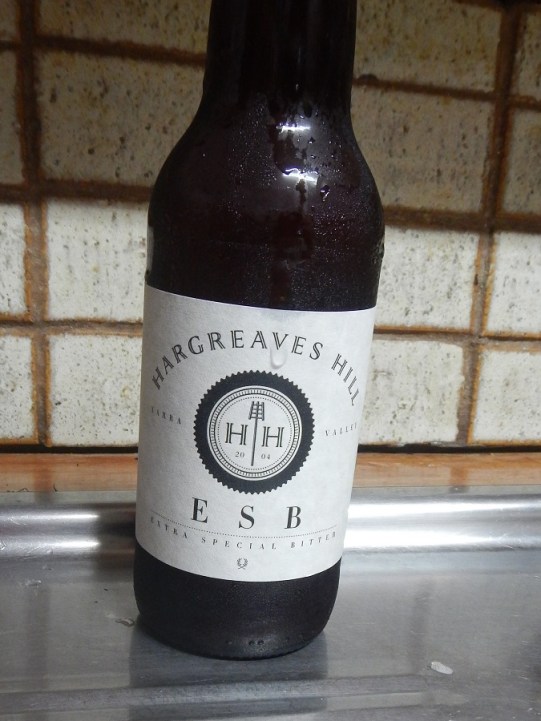 Hargreaves Hill beers. The ESB caught my eye then tipped from a glass and sent the palate into raptures. ESB stands for Extra Special Bitter, an English classic whose acronym is often associated with Fullers brewery in Chiswick, London. The benchmark to beat if you like. Which I do and Hargreaves Hill ESB nearly did. In previous blogs I have lamented the lack of decent beer in Australia, with 95% of what Aussies call beer being closer to industrial effluent, cooled, gaseated and pump-primed by marketing gurus to make the stuff sell. Of all the micro-brewery beers I have tried on this lengthy lap, Hargreaves Hill ESB takes line honours.
Not wishing to motorcycle anywhere on New Year’s Eve, we enquired what events were on offer in Cockatoo. The answer was short and sweet. The Cockatoo RSL was hosting the event 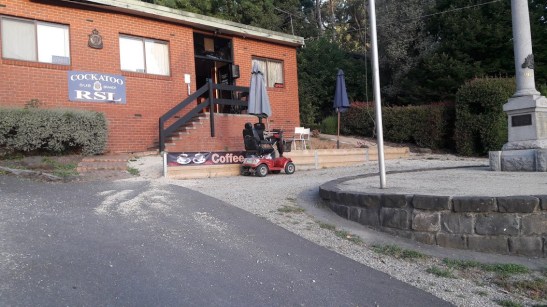 so that was our pick. However, the prospect of drinking awful beer to see in the New Year bade as badly for the year ahead as it did for my taste buds. I nipped into the RSL in the afternoon – see above photo – and arranged to deposit ample supplies of Hargreaves Hill ESB behind the bar, with a chunk of ‘corkage’ easing the way. We had a great night, meeting all sorts of people and experiencing little competition for the dance floor in spite of the DJ’s inspiring efforts. The mode of transport shown in the photo turned out to be unrepresentative of the age group there on the night. Sadly it wasn’t there when we set off to walk home.
In the other direction from Cockatoo lay Gembrook. This beautiful village seemed popular


with the lycra brigade. The Puffing Billy steam train threads its way from Belgrave through Emerald, Cockatoo and pants to a halt in Gembrook, the end of the line. We can recommend The Independent restaurant in Gembrook, having enjoyed a stimulating dinner there on the eve of our departure from the area.
On Monday 8th January 2018, we patted the dogs good-bye and rode off north to spend a couple of nights with Tom and Tanys, friends we had made at Conto camp site just south of Margaret River back in WA. They live in the hills near Kangaroo Ground, itself near Yarra Glenn and with time on our hands to stop for refreshments, we stopped our bikes


in Yarra Glenn outside what looked like a beautiful old building that functioned as a tea room. You can imagine the joy when, on closer inspection, it was the one and only Hargreaves Hill pub. Bliss. The ESB poster above refers to the Ashes tour underway at the time.
The two days with Tom and Tanys cemented the fledgling friendship. Their rural


property reminded us of our Rocklands former home, except theirs was on a much greater acreage. We walked, we talked, we plotted routes, we ate great food and enjoyed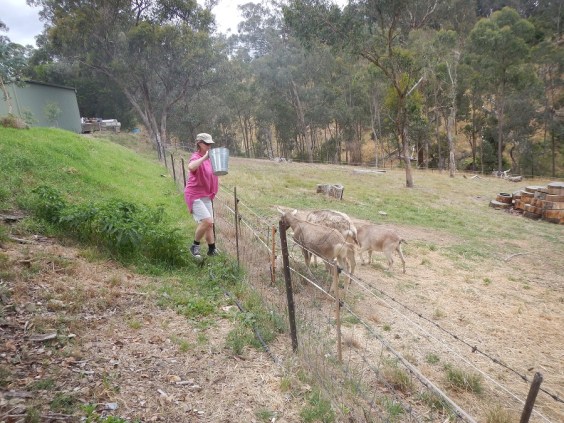 good beer, cider and a reasonable drop of 2012 Yarra Valley Pinot Noir. Our stay did facilitate some treatment of the goats where extra hands may have been useful. But goats are goats, always non-compliant and Louise’s latest blog captures the fun all too well. Above Louise is about to feed them pellets from a bucket.
The Great Ocean Road
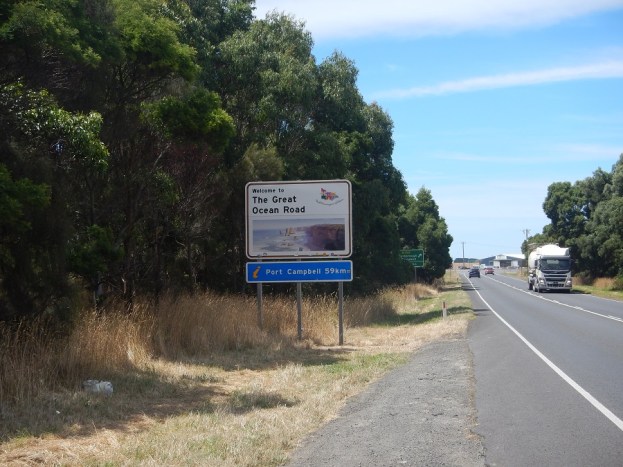
Equipped with excellent directions, we left Tom and Tanys on 10th , circumnavigated Melbourne and rode west to overnight in Colac prior to riding the Great Ocean Road from west to east. Yes, this was back-tracking but the dates of our house-sitting commitments ruled out this bit of Aussie between Penola and Cockatoo when heading east.
Louise’s good research led us to spend the night in the Princetown Reserve camp site for our first night under canvas for several weeks. It was peak holiday season so we wanted to get a tent site established around midday and only then explore the scenic treasures on the western half of the Great Ocean Road. A short distance took us to the 12 Apostles – above right. There is no doubt that this coastline is magnificent. So
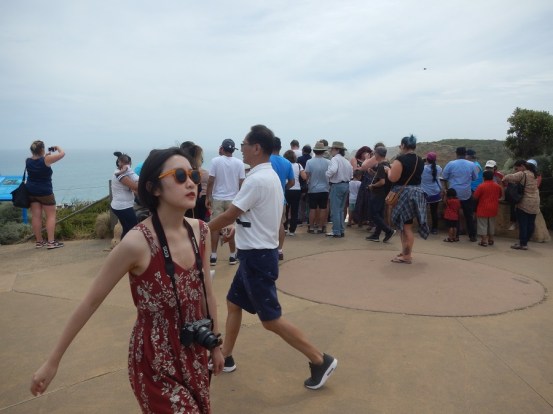 much so that there is a vast car and coach park inland of the road, with a shiny new building selling tourist essentials such as PEP bottles full of fizz, ice creams and toilets to relieve the masses. A 4 metre wide concrete pathway conveys the incoming tourism tide under the road and over to various look-out points. The human mix was 90% Asian, a bristling mass of ‘selfie sticks’, all looking to demonstrate that they ‘were there’, even if the view of ‘there’ was obliterated by ‘them’. With Tom and Tanys conversations had included reference to quality of life for Aussies and Kiwis as a priority of policy ahead of quantity of GDP growth. Immigration numbers to New Zealand and tourism numbers to both countries were touched upon in the context of a need to start a public debate about having an upper limit. The photo above should serve as a picture of Rotorua, Queenstown, the
 Coromandal, Bay of Islands, Nelson’s Abel Tasman National Park in the future if no cap on inbound tourism is introduced. Unless New Zealand’s policy settings change from GDP growth to growth within the constraints dictated by qualitative factors for Kiwis and visitors to the country, New Zealand is on a trajectory to achieve the sights above at an increasing number of ‘tourism’ sites – it is only a question of how much time.
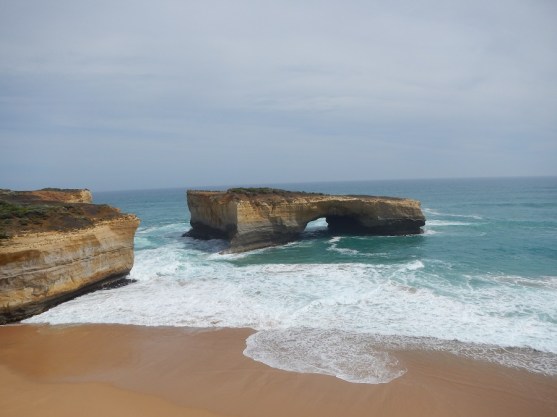
We both felt that the beauty of the natural seascape was marred by the crush of tourists, including ourselves, so we limited our stops to London Bridge, above, and the Bay of Islands (the Great Ocean Road one – below).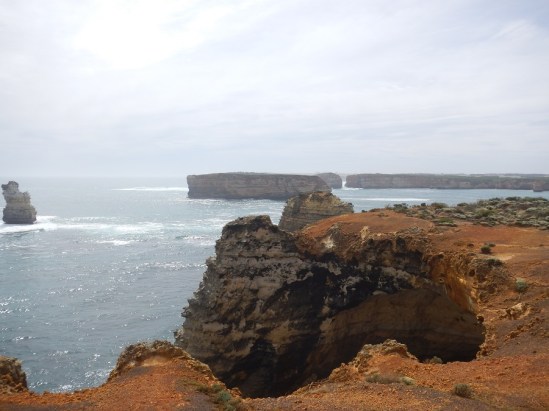
The next day our plan to continue east was threatened by forecast rain but once packed and loaded, was thwarted by a puncture in Louise’s front tyre. Options were slim and we found ourselves back in Colac for two nights, one required by the puncture, the next persuaded by the foul weather.
On the cloudy morning of 15th January we rode south from Colac to rejoin the Great Ocean Road near Apollo Bay. The ride south was invigorating and testing. The road surface was variable with some longitudinal furrows in the tarmac that induced a shimmy or two. The rain came and went while the wind blew in blusters and sideways belts. Over big hills, along twisting roads often sheltered from the sun by lines of bush left and right, we took it gently, finally being rewarded by a huge vista of coastline beyond the beautiful landscape.
For a while we roared along the Great Ocean Road, slowing before bends, leaning and accelerating into them, then immediately one the other way. We snatched quick glances at the unfolding seascape but the focus was on riding well. Eventually cars got in the way and then, at the eastern end, we became part of a long procession of vehicles all cramming their way through the towns of Lorne, Anglesea and Torquay, themselves a-throng with pedestrians.
Being keen to avoid Melbourne, we headed for the Queenscliff to Sorento ferry – Louise waiting on the vehicle deck below.
After 352 kms from Colac, we toodled into the Opel Motel in Leongatha. Due to a combination of wet weather and totally full camp sites, we had to make this our base for three nights from which to explore Wilsons Promontory, the southern-most point of Australia.
Wilsons Propomtory
This natural promontory is exclusively The Wilsons Promontory National Park and pokes out from the mainland about 50kms southwards. We rode for an hour or so from Leongatha to Tidal River as far as the road would take us.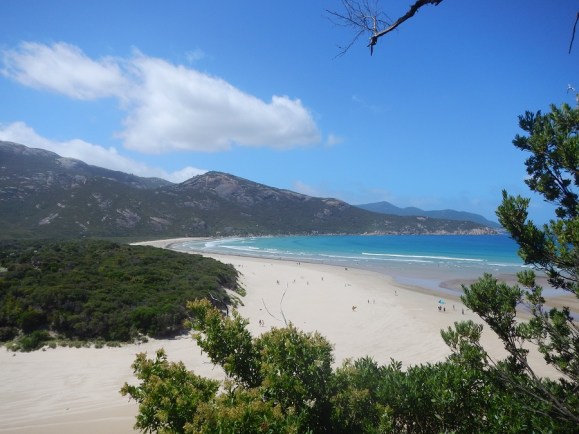 The beach for the Tidal river camp site is on the left. The helpful people at the camp site looked after our bike gear leaving us suitably clad to go on a walk to Squeeky Beach (below) and on to Picnic Beach. I boldly ventured into the sea to humiliate some waves with a bit of body surfing. The waves had other ideas and with a couple of glorious exceptions, I experienced the front-loading washing machine treatment.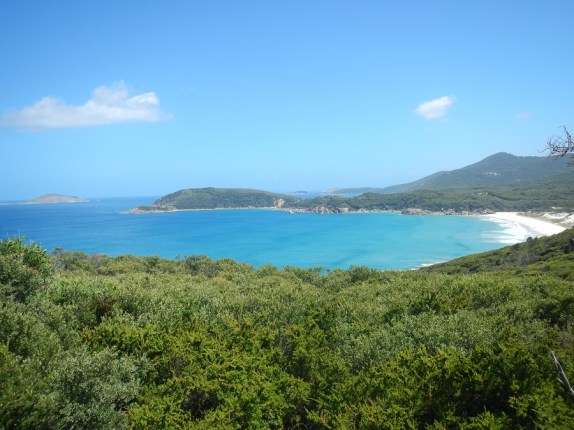
This beautiful bit of land offers high rewards to those prepared to do some multi-day walks with virtually untouched bays and high hills preserved for native fauna and flora to flourish.
Omeo in the Victorian Mountains
Tom and Tanys had suggested we detour from our eastward journey along the coast road and head north to Omeo in the Alpine National Park, part of Australia’s Great Dividing Range.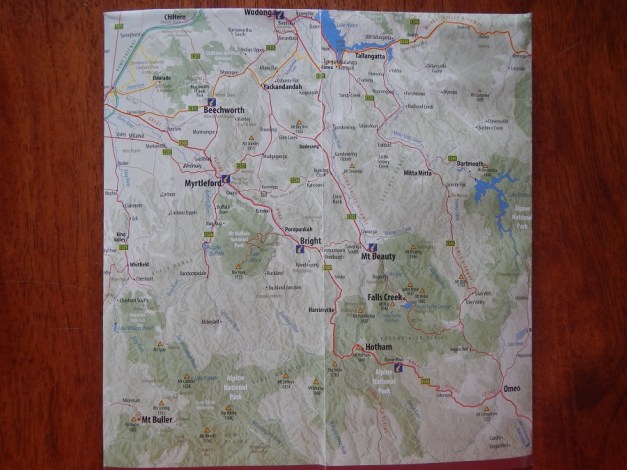
Just as described to us, the ride up was terrific, big hills, bends, bends and more bends – a superb antidote to the straight roads of the bulk of this odyssey. The map above gives a clue as to the location and terrain.
The Hilltop Hotel offered free camping to the rear, (per photo below) with access to shower and toilet and with no obligation to eat there. We made this our base for three days and ate in the pub every night – excellent value.
Omeo was another gold rush centre, albeit a small one. We did a 6 km walk out to and around the Oriental gold mining site. It was an alluvial mining operation, the sluicing of the clay combining with the diggings to create a wasteland. For environmental reasons it was closed down in the early 1900s after 50 years of continuous production. We re-entered Omeo via the local swimming hole where a cooling dip hit the spot on this mid-thirties day.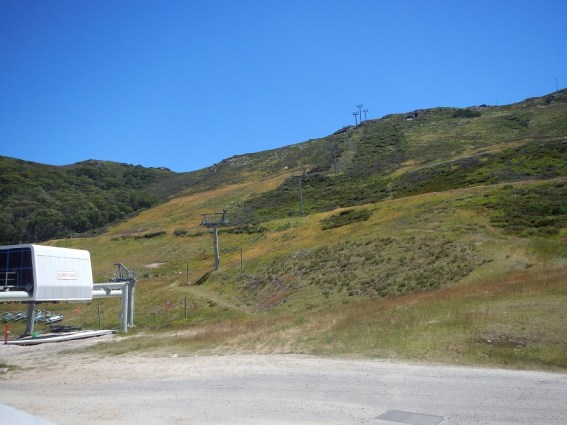
Yogi Holten was motorbiking his way back to Sydney from Melbourne, camping at the pub as well. We teamed up with this interesting and entertaining character. He led us on a loop ride, out to Falls Creek (Ski field sans snow above), Mount Beauty, across a hairy link road to the B500 and along to Harrietville, up to Mount Hotham – photo below taken at the Mt Hotham look-out near the summit, Yogi on left. and back to Omeo. On the Saturday (20th) the three of us shifted camp to a little reserve by a bend in the river at Angler’s Rest – photo below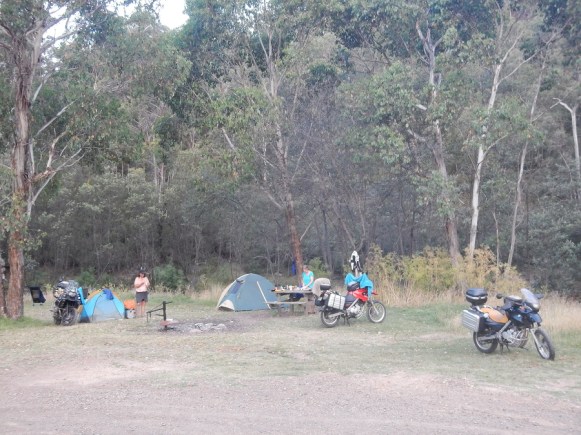
It was lunch-time so having set up our tents, we rode a kilometer to The Blue Duck pub (below) where a steak and Guinness pie achieved a unique 10 rating. Well fed, we rode back to camp and slipped into the pristine waters of the gentle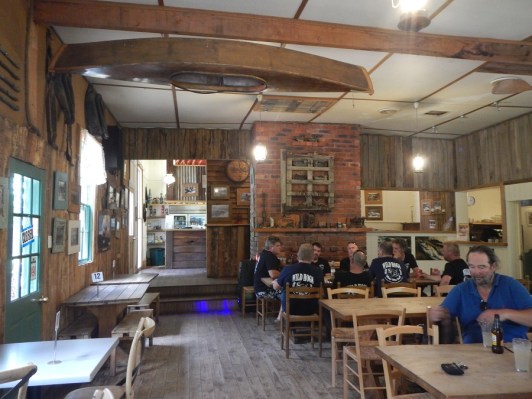 little river to cool off. That evening it was steak and salad by the river, invigorating conversation and a skyful of stars to bid us all good-night. This is a truly tough lifestyle.
No Sunday morning lie-in – we were up, packed and off by 9.30 riding to the South East tip of Australia, some 303 kms away along magnificent motorbike riding country. Yogi Bear packed up his honey pots and headed north but not off our radar.
Last Stay in Victoria – Mallacoota
Right down in the SE corner, 23 kms off the Prince’s Highway (A1 coast road around Aussie) lay Mallacoota, a low key Aussie village by a beach and an inlet. The beach was the normal expanse of white sand and blue sea, this one complete with local Surf-Life Savers. The surf was ideal for body-surfing – no washing-machine treatment this time, just zooming in to the beach an seething white surf.
When Tuesday morning came, we headed back up to the coast road to ride up to Eden, crossing the border into New South Wales along the way. That state will have to wait for the next posting.
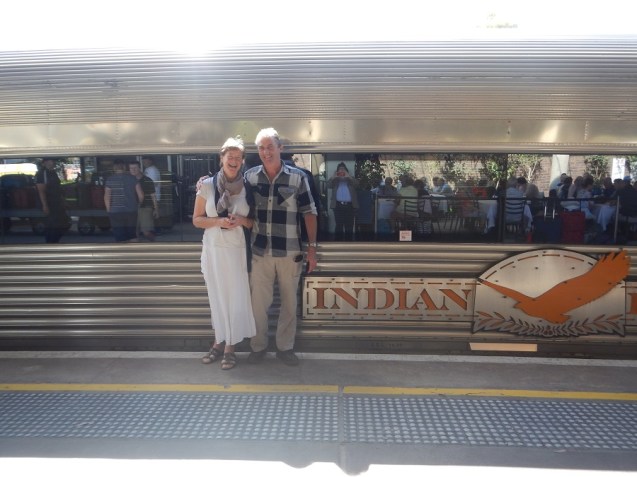
 consigned to lorry transport on 17th and we boarded the 675 metre long Indian Pacific Train at East Perth station for an all-inclusive choo choo ride across to Adelaide, some 2,669 kms to the east.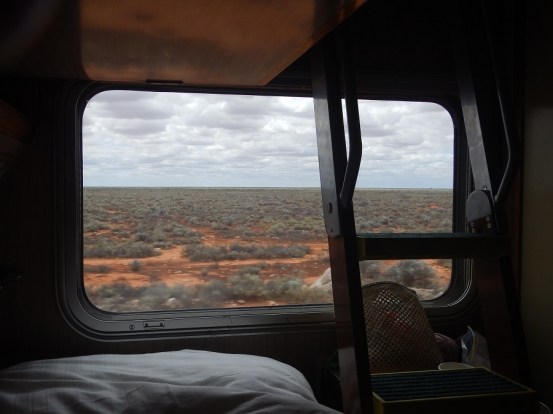
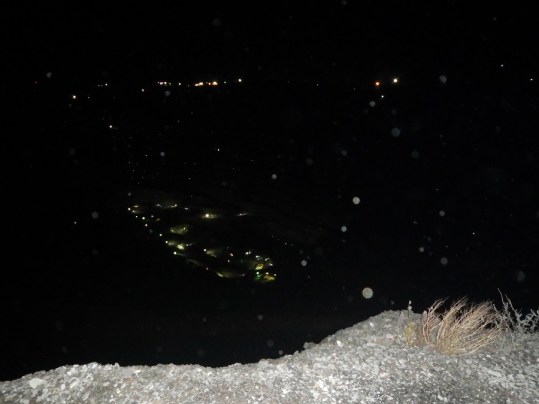 Due to a wild storm the previous day, most of the town was in darkness and our trip was confined to a look into the “Superpit”, the largest open cast mine in Australia – also in darkness. The patterns of little lights are the large lorries filling and making their way up and out of the 3.5 kms long, 1.5 wide and 600 metres deep pit. Like the Tom Price mine up in the Pilbara, the numbers were mind-blowing. It took the entire 255 tonnes of dirt in the back of one house-sized lorry, to make a golf-ball-sized lump of gold. The cost of production is high at around US$900 per tonne but with the spot price being relatively stable around US$1200 and the scale of production so vast, there’s a bit of profit being enjoyed.
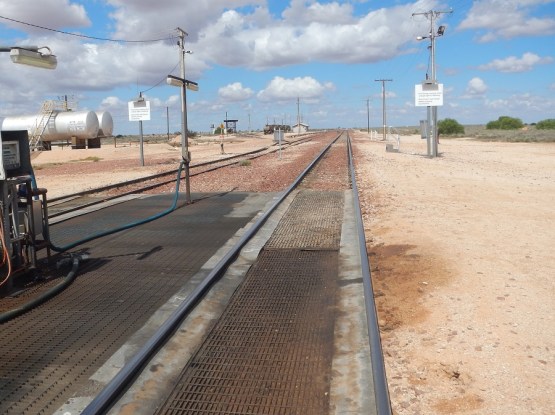 with just one train passing through per week, life in Cook might be a fraction dull. But when I asked a chap driving a ute about the pace of life, or something along those lines, he explained how Cook receives visits from other trains, all bringing supplies for the Indian Pacific. Fuel was one example he volunteered. In case you think the railway line shown above looks straight, it was. In fact, 487 kilometres of dead straight rail track – the longest straight stretch of railway in the world.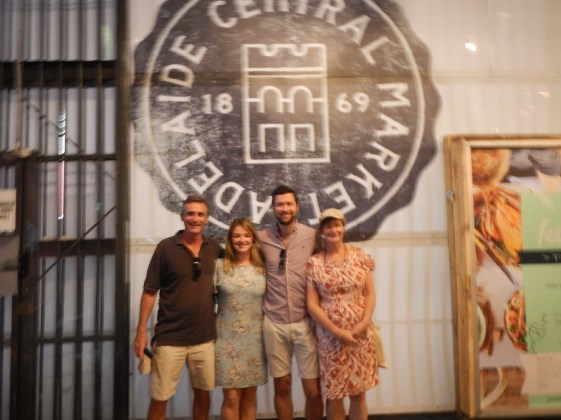
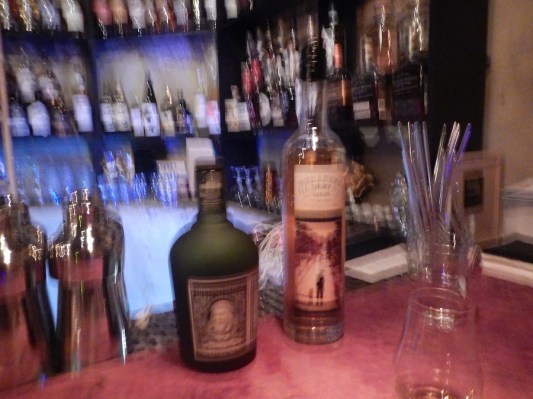 which, Birthday Boy wished to kick on and find a whisky bar or two. Louise and Holly headed home while I accompanied Hamish as he sniffed out hidden dungeons a little bit like Baxter’s in Sydney. The photo above right was taken in an attempt to record the beautiful manifestations from the top shelf , and as if to back up the claim that the camera never lies, the shot is slightly blurred. After three bars and three delicious shots, I felt it was time to totter home. A great night and a birthday well celebrated.

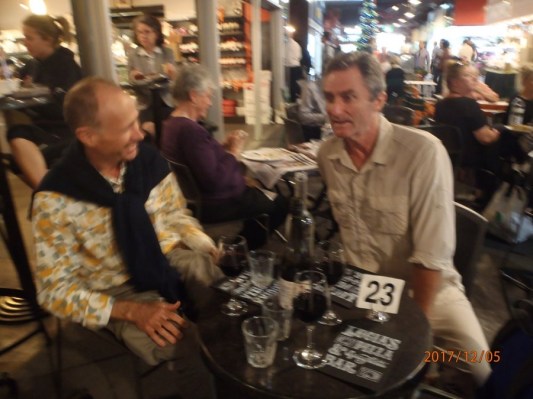 get a day’s work in and still see half the action. For us the delayed start facilitated a visit to the Central Markets for a forage and a lunch – right. On his last day we hired a car to visit a few McLaren Vale wineries, starting at D’Arenberg, going out to Yangarra (superb) see photo below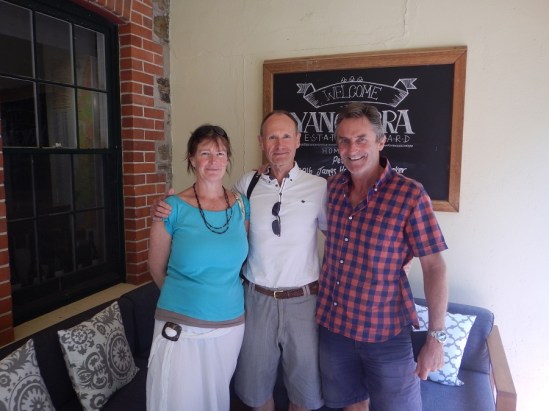
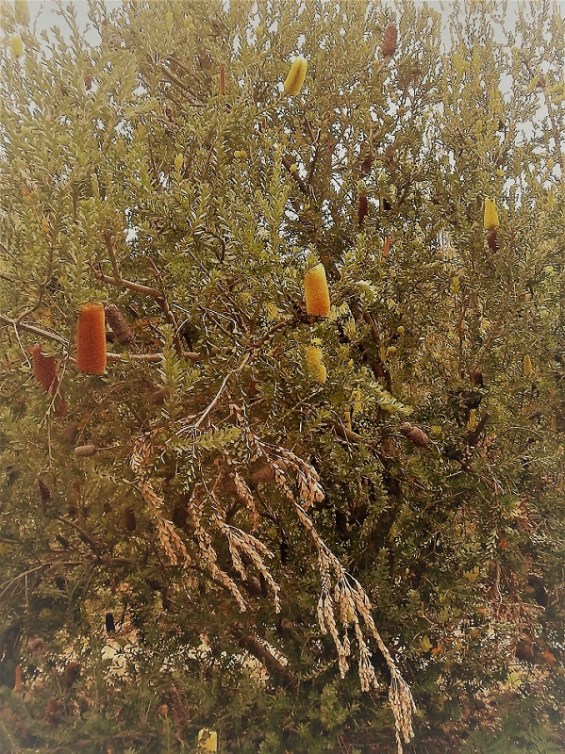
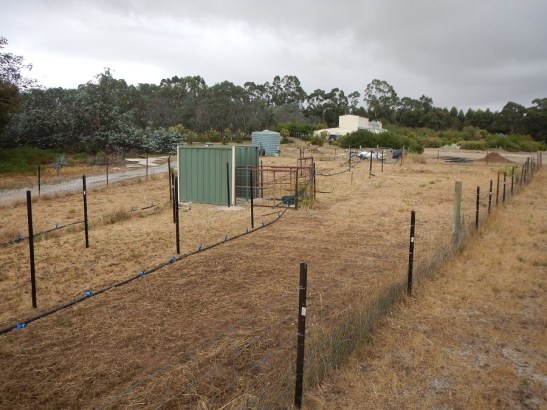 being to create a predator-proof area in which to experiment with different annual crops, with a small chicken population being rotated to improve soil aeration and nutritional quality.
 into annual crops is to identify a viable diversification to the farm’s main income stream while keeping the manual effort to within the two-person team that is already pushed pretty hard. The photo on the left shows the progress we made relative to the one above it, taken early on in the effort. We enjoyed the work, the learning opportunity and most of all, the insight into this particularly brave and hard-working couple. Thinking of Africa,
  while I was banging in fence posts, Louise spent many hours wrestling a lawnmower over the dry, uneven ground, taking on Kenyan hues as she went – see photo on right of my Kenyan wife.
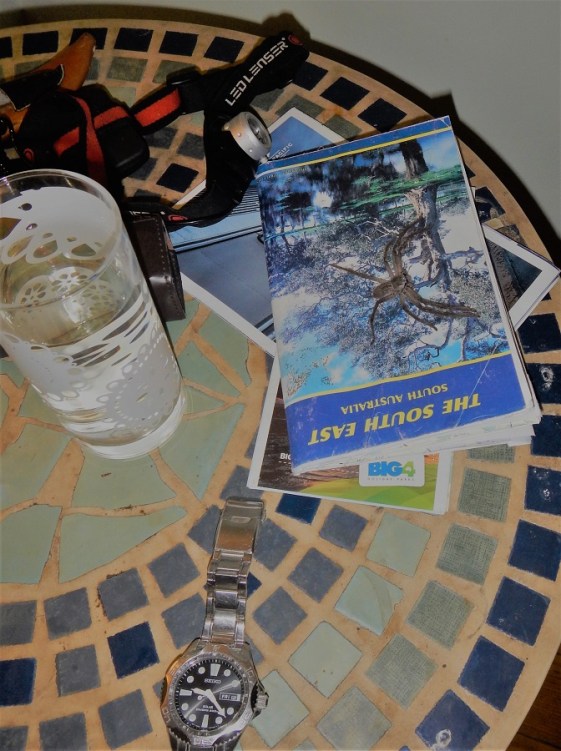 I noticed a large Huntsman spider skulking on the map next to me on the bedside table. He didn’t seem to mind being relocated outside as much as I minded him remaining inside.


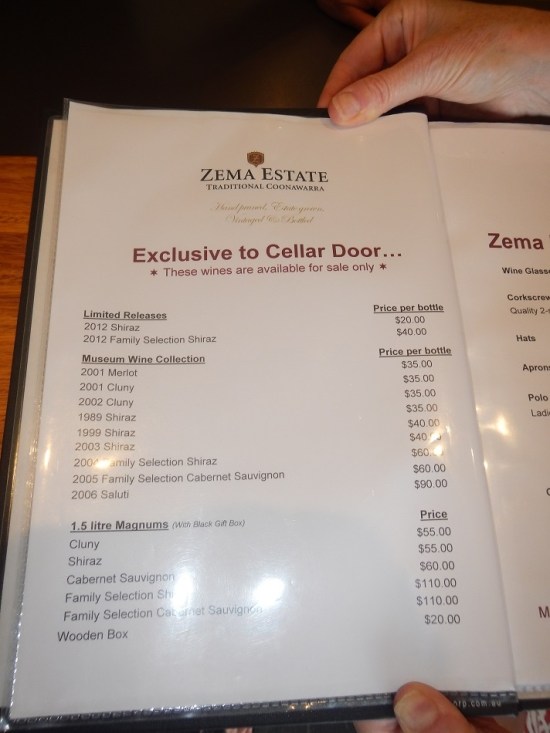 Sauvignon was grander than the price suggested.
 sweet backdrop to the flavours arrayed on the pallet. The answer lay beneath our feet in the famous Terra Rossa soils – per the photo of a soil profile to the left.
 wineries we visited or passed had prominent Santas, each demonstrating a particular recreational activity. This ‘theme’ seemed to have been agreed as a local promotion. Louise included a few in her Christmas post. The one above right was outside a farm on the road from Penola back to the flower farm. This one is fishing.
 our time with Jessie and Edna came to an end and on Christmas Day, we took one last glance at the aviary-like theatre and rode off east 340 kms to check into the Mid City Hotel in Ballarat before 12 noon when a ‘Special Christmas Day’ lunch awaited us.

 jrtonlocation.com